Sunday, January 11, 2015

25 Amazing Business Books From 2014

Whether you're planning a much-needed vacation or gearing up to visit the family during the upcoming holidays, now is the perfect time to find a book to help you kill the time during your travels. But why not get something more out of your reading?

Here are 25 amazing business books from 2014 that will inspire, motivate and offer priceless advice for the entrepreneur, business leader, or hopeful business owner for upcoming year.

1. "The Virgin Way: Everything I Know About Leadership" by Richard Branson

As the founder and chairman of the Virgin Group, Richard Branson is currently estimated to be worth $5 billion. That’s why the latest book from this eccentric entrepreneur and adventurer is a must read. Branson shares his unorthodox leadership techniques that have made him one of the most successful entrepreneurs of the last forty years.

2. “The Innovators: How a Group of Hackers, Geniuses, and Geeks Created the Digital Revolution” by Walter Isaacson

Author Walter Isaacson follows-up his incredible Steve Jobs biography with a chronicle of some of the most disruptive minds in the technology industry. It begins with computer pioneer Ada Lovelace, the daughter of Lord Byron, who developed computer programming back in the 1840s. It also explores the minds of everyone from Robert Noyce to Sergey Brin and Larry Page.
Related: Bill Gates' 5 Favorite Books of 2014

3. “How Google Works” by Eric Schmidt and Jonathan Rosenberg

Were you ever curious about how Google’s business model worked? If so, check out this informative book from Google executive chairman and ex-CEO Eric Schmidt and former SVP of Products Jonathan Rosenberg. It illustrates how you can make a business successfully by fostering a creative environment.

4. “The Hard Thing about Hard Things: Building a Business When There Are No Easy Answers” by Ben Horowitz

As of one of Silicon Valley’s most respected entrepreneurs, Ben Horowitz has proven throughout this career that he knows how launch and manage startups. This is easily one of the essential books every business leader should read if they’re looking for proven and honest management advice.

5. “Economics: The User’s Guide” by Ha-Joon Chang

Written by Cambridge University economist professor Ha-Joon Chang, this book breaks down the history and real-world applications of the real-world economy in a lively and easy-to-understand context.

6. “Zero to One: Notes on Startups, or How to Build the Future” by Peter Thiel with Blake Masters

While this is intended for entrepreneurs, this book has info useful for anyone in the business world. It offers practical and original advice for anyone starting a business - all in under 200 pages.

7. Console Wars: Sega, Nintendo, and the Battle That Defined a Generation by Blake J. Harris

How could anyone take-on the powerhouse that was Nintendo? Blake J. Harris chronicles how a scrappy business named Sega took on Nintendo with a vision to become a market leader in a matter of years. Whether you’re a Gen X gamer or starting a business, the origin stories of how Nintendo and Sega are entertaining and inspiring.

8. "The Shifts and the Shocks: What We've Learned — and Have Still to Learn — from the Financial Crisis" by Martin Wolf

Martin Wolf, the chief economic commentator for the Financial Times, explores the origins of the recent financial crisis, analyzes why we may still be in trouble and examines how the global economy has since changed.

9. “How We Got to Now: Six Inventions That Made the Modern World” by Steven Johnson

This fascinating book takes a look at how innovation has changed our world. Perhaps most intriguing is how Johnson can relate seemingly unrelated inventions - such as the invention of air conditioning - to the largest migration of humans in history.

10. “The Moment of Clarity: Using the Human Sciences to Solve Your Toughest Business Problems” by Christian Madsbjerg and Mikkel B. Rasmussen

Christian Madsbjerg and Mikkel B. Rasmussen explain how human behavior has led to ineffective problem-solving methods. By using the social sciences, the authors introduce a new methodology known as sensemaking.
Related: 14 Books Every Entrepreneur Should Read in '14

11. “The Power of Habit:Why We Do What We Do in Life and Business” by Charles Duhigg

This best-selling book from New York Times investigative reporter Charles Duhigg takes a look at how identifying patterns in our daily life can help us become successful. Duhigg states once we are aware of these habits, we can become able to change them and become more successful.

12. "A More Beautiful Question: The Power of Inquiry to Spark Breakthrough Ideas" by Warren Berger

This thought-provoking book examines how successful individuals are also expert questioners. By asking questions, we are able to solve problems and develop innovative ideas.

13. "Dataclysm: Who We Are (When We Think No One's Looking)" by Christian Rudder

Rudder, co-founder of the dating site OKCupid, argues how we can use big data to monetize and optimize. While that may sound like a dull topic, Rudder is an entertaining and witty author who presents a completely original book.

14. "The Intel Trinity: How Robert Noyce, Gordon Moore, and Andy Grove Built the World’s Most Important Company" by Michael S. Malone

Through extensive and unprecedented access to Intel's archives, Malone describes how each of these vital members of Intel brought various skills and talents to the company to make it the giant it is today.

15. "Location Is (Still) Everything: The Surprising Influence of the Real World on How We Search, Shop, and Sell in the Virtual One" by David Bell

Even if you run an online business, it's still important to understand how your location can determine it's success. Through years of research and experience, Wharton professor David Bell explains how the online and offline worlds are connected and how you can ensure your business will succeed.

16. "Smartcuts: How Hackers, Innovators, and Icons Accelerate Success" by Shane Snow

Serial entrepreneur and journalist Shane Snow explains how successful individuals use "lateral thinking" to think outside of the box and grow their brands and companies faster than the normal rate.

17. "Smart Tribes: How Teams Become Brilliant Together" by Christine Comaford

By using neuroscience techniques, Comaford will help you figure out how to hire the right people for the right positions so you can build a company culture that motivates, inspires, and brings out the best in team members.

18. "Outliers: The Story of Success" by Malcolm Gladwell

Best-selling author Malcolm Gladwell suggests we should stop paying attention to what successful people are, and pay more attention to where they came from. By examining everyone from Mozart to Bill Gates, Gladwell argues that successful people aren’t lucky, they “rise on a tide of advantages”.

19. "Crazy Is a Compliment: The Power of Zigging When Everyone Else Zags" by Linda Rottenberg

Between research, inspiring research and the personal experience of author Linda Rotenberg details how all businesses should embrace the mentality of an entrepreneur - meaning that they take calculated risks, being flexible and unique.
Related: 14 Classic Business Books You Can Download For Less Than $5

20. “This Changes Everything” by Naomi Klein

This powerful and profound book examines how we need to make changes to the current economic situation in order to save the planet.

21. “The Motivation Manifesto” by Brendon Burchard

What makes this such an inspiring read is that Burchard doesn’t just provide tactics that will make you successful. Instead, he explores the inner psychology of humans and discusses how doubt and fear hold us back and how you can break free to live the life you want.

22. “Scaling Up Excellence: Getting to More Without Settling for Less” by Robert Sutton and Huggy Rao

By using case studies and examples of industry leaders, Sutton and Rao explain how you can create a successful business by looking at every aspect of your company or startup.

23. "Me, Inc.: Build an Army of One, Unleash Your Inner Rock God, Win in Life and Business" by Gene Simmons

Gene Simmons is more than the bass player from KISS. He’s an extremely successful businessman that delivers honest, and actually words of wisdom, for entrepreneurs and anyone aspiring to launch a business empire.

24. “Leaders Eat Last: Why Some Teams Pull Together and Others Don’t” by Simon Sinek

Sinek, author of the best-selling book Start with Why, details how biology makes us feel secure in groups. When leaders create an environment built on trust, cooperation, and security, employees will actually love going to work.

25. “The Promise of Pencil: How an Ordinary Person Can Create Extraordinary Change” by Adam Braun

This inspiring book follows Adam Braun, the founder of Pencils of Promise, and how he turned $25 into over 250 schools by combining a for-profit business approach with social sector idealism for an idea known as "For-Purpose."

Every book on this list has inspired me to become better today that I am tomorrow. Ever since I became an entrepreneur I have been reading business books and learning from entrepreneurs who have been there. I hope you find this list as inspiring as I did.

Saturday, January 10, 2015

4 Ways to Make Mobile Work for Your Customers

The fact that your business needs a mobile presence is by no means news. Brands today know that being accessible to the increasing number of smartphones and tablet users is a must — now, the goal is to provide a top-notch user experience.

"Mobile is opening the door for designing new experiences that complement a brand's physical presence," Young Pham, chief strategy officer at design and strategy agency Comrade, said in a statement. "The context of when, where and what a customer is doing during their day allows companies to enhance a person's interaction and customize device-specific experiences."

Comrade recently conducted a survey of 225 mobile users to delve further into the relationship between consumers and their devices. Based on the results, the company predicted that brands will need to meet the following mobile experience expectations in 2015.

Mobile apps and mobile Web. Got a mobile app but not a mobile-friendly website, or vice versa? You might want to put your energy into leveling out your mobile presence. Consumers are about equally split when it comes to their preference of app versus browser: The percentage of users who prefer their mobile browser when completing a task (28 percent) is only slightly higher than the 23 percent that prefer to use an app. Both app and Web designs are critical for businesses in the mobile space, so it pays to do them right.

CRM through mobile marketing. Mobile marketing isn't just for acquisition anymore. Today, it's about boosting loyalty by using mobile for customer relationship management (CRM). According to Kleiner Perkins Caufield & Byers's 2013 Annual Internet Trends Report, consumers always have their mobile device on them and check it more than 150 times a day. Businesses can communicate with their existing customers through alert notifications, in-app, email and mobile Web. But don't overdo it — the Comrade study said that key to maintaining an effective relationship is doing so in a complementary way, giving users what they need when they need it.

Combating fraud through mobile. This past year has seen a lot of high-profile corporate data breaches, and 2015 will likely see some as well. Mobile users want to safeguard themselves against fraud, and 56 percent are willing to deal with a slightly more complex user experience if it means greater protection, according to Comrade. Businesses can provide an intuitive, high-quality mobile experience that also protects against fraud by offering to validate transactions, set fraud controls and generate unique payment IDs through the user's mobile device.

Complement, not copy. E-commerce providers must leverage mobile to complement the user experience, rather than provide a replica of what users get through a Web browser. Comrade's survey found that nearly 4 in 10 mobile users are most likely to use their mobile phone for shopping, so businesses need to ensure that those customers are getting something unique from their mobile interaction.

Source

Friday, January 9, 2015

The Difference Between Successful and Very Successful People

I recently met with a capable and driven executive and asked him, “How are you?” He gave me a rapid-fire answer of all of the things he was doing: travelling, business updates, career changes and his children’s innumerable activities. It sounded like an intense but satisfying life.

Then I asked him again, “How are you really?” And the moment I did, he became emotional and the reality of his life just flooded out of him: his stress, his frustration of trying to juggle it all, his sense that he had no time to really think, or play with his children or enjoy any of it. The (cute) summary is this: his schedule was always filled but his life wasn’t fulfilled. What is less cute is the idea that he, and many of us, have been sold a bill of goods.

We’ve been sold on a heroic ideal of the uber-man and super-women who kill themselves saying yes to everyone, sleeping four hours a night and straining to fit everything in. How often have you heard people say, “I am so busy right now!” But it almost seemed like a back-door brag.


But it’s a bogus badge of honor. It suffocates our ability to think and create. It holds otherwise hard working, capable people back from our highest contribution. Below are a few of the myths of success that hold us back from becoming very successful.

Myth 1: Successful people say, "If I can fit it in, I should fit it in."

Truth: Very successful people are absurdly selective.
As Warren Buffet is credited with having said, “The difference between successful people and very successful people is that very successful people say no to almost everything."

As I wrote in a piece for Harvard Business Review, this means, "Not just haphazardly saying no, but purposefully, deliberately, and strategically eliminating the nonessentials. Not just once a year as part of a planning meeting, but constantly reducing, focusing and simplifying. Not just getting rid of the obvious time wasters, but being willing to cut out really terrific opportunities as well. Few appear to have the courage to live this principle, which may be why it differentiates successful people and organizations from the very successful ones."

Myth 2: Successful people sleep four hours a night.

Truth: Very successful people rest well so they can be at peak performance.
In K. Anders Ericsson's famous study of violinists, popularized by Malcolm Gladwell as the "10,000 hour rule," Anders found that the best violinists spent more time practicing than the merely good students. What is less well known is that the second most important factor differentiating the best violinists from the good ones was actually sleep. The best violinists averaged 8.6 hours of sleep in every 24 hour period.

Myth 3: Successful people think play is a waste of time.

Truth: Very successful people see play as essential for creativity.
Just think of Sir Ken Robinson, who has made the study of creativity in schools his life's work. He has observed that instead of fueling creativity through play, schools actually kill it: "We have sold ourselves into a fast-food model of education, and it's impoverishing our spirit and our energies as much as fast food is depleting our physical bodies. Imagination is the source of every form of human achievement."

Myth 4: Successful people are the first ones to jump in with an answer.

Truth: Very successful people are powerful listeners.
As the saying goes, the people who talk the most don't always have the most to say. Powerful listeners get to the real story. They find the signal in the sound. They listen to what is not being said.

Myth 5: Successful people focus on what the competition is doing.

Truth: Very successful people focus on what they can do better.
The "winningest coach in America" is Larry Gelwix, the former Head of the Highland High School rugby team. His team won 418 games with only 10 losses in over 36 years. One of the key questions he challenged his players to ask was “What’s important now?" He didn't want his players getting distracted with what the other team was doing. He wanted them to play their own game.
Last week I took a tour of the Kennedy Presidential Library in Boston, Massachusetts. One of the quotes there grabbed my attention. John F. Kennedy said, "The great enemy of the truth is very often not the lie, deliberate, contrived and dishonest, but the myth, persistent, persuasive and unrealistic."

The myth here is celebrated in modern culture: it’s someone who is capable, driven and wants to win and be popular. They have been rewarded for their willingness to take it all on, fit it all in and just make it happen. They believe doing more is better than doing less. I call this type of person a Nonessentialist.
Still, there is a new hero in our story. She asks, “What is essential?” and is willing to eliminate everything else. He says no to the less important activities so they can give themselves fully to the few things that really matter. It is a path that takes courage. It may require making the tradeoff between short-term popularity and long-term respect. It leads to a greater sense of control and even joy. But as an added benefit it also seems to be the thing that distinguishes the successful from the very successful.

Source

Thursday, January 8, 2015

10 Quick Ways to Improve Your Email Marketing

With more than 90 percent of consumers checking their email on a daily basis, businesses are quickly realizing this is one of the best ways to reach their target audience.

Whether it's to spread company news, promote a sale or highlight new products and services, companies are finding great value in their email marketing efforts.

"2014 showed email's continuing momentum as the best marketing tool to drive (return on investment)," Dan Forootan, president of StreamSend Email Marketing, said in a statement.

To help businesses improve their email marketing campaigns and make sure their efforts are paying off, StreamSend offers a number of tips.
  • Measure it: One of the greatest aspects of email marketing is just how easily it can be measured. Take advantage of tools that show who read what and where and who didn't as a way to best determine when to build on successful efforts or fix lagging results.
  • Use video: Adding videos to emails increases return on investment and monthly revenue by 40 percent. Additionally, click-through rates increase by as much as 3 times when marketers include a video in an email.
  • Go mobile: Mobile devices offer marketers a way to reach customers wherever and whenever they want. However, this makes creating a solid campaign more critical than ever, since the email will often be judged with just one glance.
  • Increase open rates: To make an impact, emails need to stand out. Review open rates to see which emails are getting the most interest from your consumers. Make sure each email is serving the customer.
  • Be recognizable: Since you may have only a second or two to grab your customer's inbox attention, use a consistent look, format and subject line to make it easy for them to recognize your emails.
  • Click-through: Since click-through rates gauge your success, be sure to make your call to action loud and clear so consumers have a reason to click on your links. You also need to measure links clicked to guide future content.
  • RSS feeds: Businesses with regular RSS updates – syndicated live Web feeds -- can more effectively connect with their audiences and attract new followers. Sharing RSS content allows organizations to multiply their number of readers, which helps draw in more customers in the long run.
  • Use templates: Often the easiest and most reliable way to send emails with a branded look and optimize reader response is to take advantage of email templates.
  • Add social: Emails that include social-sharing buttons have a click-through rate 158 percent higher than emails that don't. Adding social media to an email strategy can produce large campaign results.
  • Bottom line: When creating email campaigns, ensure they align with your overall business goals so you can best guide content and strategies.

Wednesday, January 7, 2015

8 Books Every Entrepreneur Should Read in 2015

My dad always used to tell me that the difference between the “you” now and the “you” 20 years from now will be the places you visit and the people you meet. I would also add baldness and gray hair to that, but they don’t sound as cool.

He was right. Whether you meet someone in person or read a book he or she authors, people are pivot points that enable learning and foster personal growth for others.

Since January marks the rush for New Year’s resolutions and personal "pivots," below are eight books every entrepreneur should read in 2015:

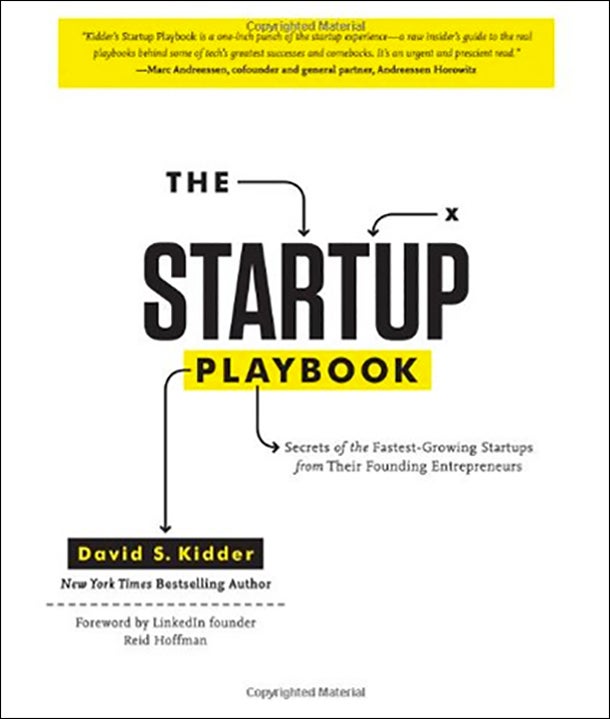
The Startup Playbook: Secrets of the Fastest-Growing Startups From Their Founding Entrepreneurs by David Kidder

1. The Startup Playbook: Secrets of the Fastest-Growing Startups From Their Founding Entrepreneurs by David Kidder

The title says it all. If you’re looking for a wide array of lessons learned and entrepreneurial experiences, this book is for you. Sharing insights from 41 different founders, The Startup Playbook covers everything from leadership lessons to finding one’s niche.

Creativity, Inc.: Overcoming the Unseen Forces That Stand in the Way of True Inspiration by Ed Catmull

2. Creativity, Inc.: Overcoming the Unseen Forces That Stand in the Way of True Inspiration by Ed Catmull

This book is a must read for any business leader, not just the entrepreneur. It is filled with valuable insights about what creates, drives and sustains an innovative culture and compels a company to attempt what no other company has done. Remarkable lessons that only a CEO would know.

True North by Bill George and Peter Sims

3. True North by Bill George and Peter Sims

This is a great book to discover your personal leadership vision, values and motivations. The authors surveyed 125 men and women on what they believe makes them authentic leaders, and the answers may surprise you. Also of note is the personal leadership development portfolio handbook that accompanies the book, which is a personal guide to help you develop your authentic leadership.

Zero to One: Notes Startups, or How to Build the Future by Peter Thiel

4. Zero to One: Notes Startups, or How to Build the Future by Peter Thiel

The following excerpt sums up the concept of Theil’s book: “Doing what someone else already knows how to do takes the world from 1 to n, adding more of something familiar. But when you do something new, you go from 0 to 1.”
This bestseller is geared specifically towards the startup community as it offers invaluable advice on what to consider and what to avoid before moving forward. Additionally, the author offers his philosophy on business, which helps the reader generate new ideas he or she may not have considered previously.

ThinkerToys by Michael Michalko

5. ThinkerToys by Michael Michalko

The ability to create is just that -- a developable ability -- that can be learned and improved upon much like any other competency, and the author does just that in this creativity “bible.” After all, creativity and opportunity are what emboldens wannabe startup founders to take the plunge into the world of debt known as entrepreneurship. ThinkerToys, and its companion Thinkpad: A Brainstorming Card Deck, offers 33 different exercises and 56 cards that will spark your creativity and inspire the innovation monster within.

Unbroken: A World War II Story of Survival, Resilience, and Redemption by Laura Hillenbrand

6. Unbroken: A World War II Story of Survival, Resilience, and Redemption by Laura Hillenbrand

There’s a reason why this book is number one on Amazon and a Hollywood motion picture. While entrepreneurism isn’t quite the theme of this book, the lessons of personal sacrifice, survival and resiliency are. After reading this book your perspective on founding a startup may change because if the main character, Louie Zamperini, overcame the challenges and catastrophes he faced, then so can you.

Team of Teams: New Rules of Engagement for a Complex World by Gen. (Ret.) Stan McChrystal, Chris Fussel, Tantum Collins, and David Silverman

7. Team of Teams: New Rules of Engagement for a Complex World by Gen. (Ret.) Stan McChrystal, Chris Fussel, Tantum Collins, and David Silverman

As head of the Joint Special Operations Command (JSOC), Gen. (Ret.) Stan McChrystal faced an enemy that was constantly changing before his very eyes. In a world of both complicated and complex challenges, how do you stay ahead of the power curve while the world and competition change? This book explains how.

Abundance: The Future is Better Than You Think by Peter Diamandis and Steven Kotler

8. Abundance: The Future is Better Than You Think by Peter Diamandis and Steven Kotler

While this book is completely visionary, it raises questions and concerns about current industrial and societal trends and where they will lead in the future. From a startup perspective, the global challenges the authors envision also serve as business opportunities. Of note, the authors have a second book entitled Bold coming out in February 2015 that will “teach today’s entrepreneurs the tools, technologies and mindsets they will need to make ‘it’ happen.”
Every book has some takeaway that can be applied towards any endeavor. What were your favorite books and lessons from 2014?

Source

Tuesday, January 6, 2015

Monday, January 5, 2015

7 Steps to Defining Your Niche Market

In their book, Start Your Own Business, the staff of Entrepreneur Media, Inc. guides you through the critical steps to starting a business, then supports you in surviving the first three years as a business owner. In this edited excerpt, the authors explain how you can find the right niche for your entrepreneurial needs.

You’ve come up with a great idea for a business, but you’re not ready to roll yet. Before you go any further, the next step is figuring out just who your market is.

There are two basic markets you can sell to: consumer and business. These divisions are fairly obvious. For example, if you're selling women’s clothing from a retail store, your target market is consumers; if you're selling office supplies, your target market is businesses (this is referred to as “B2B” sales). In some cases—for example, if you run a printing business—you may be marketing to both businesses and individuals.

No business—particularly a small one—can be all things to all people. The more narrowly you can define your target market, the better. This process is known as creating a niche and is key to success for even the biggest companies. Walmart and Tiffany are both retailers, but they have very different niches: Walmart caters to bargain-minded shoppers, while Tiffany appeals to upscale jewelry consumers.

“Many people talk about ‘finding’ a niche as if it were something under a rock or at the end of the rainbow, ready-made. That's nonsense,” says Lynda Falkenstein, author of Nichecraft: Using Your Specialness to Focus Your Business, Corner Your Market and Make Customers Seek You Out. Good niches don't just fall into your lap; they must be carefully crafted.

Rather than creating a niche, many entrepreneurs make the mistake of falling into the “all over the map” trap, claiming they can do many things and be good at all of them. These people quickly learn a tough lesson, Falkenstein warns: “Smaller is bigger in business, and smaller is not all over the map; it’s highly focused.”

Creating a good niche, Falkenstein advises, involves following a seven-step process:

1. Make a wish list.

With whom do you want to do business? Be as specific as you can. Identify the geographic range and the types of businesses or customers you want your business to target. If you don’t know whom you want to do business with, you can’t make contact. “You must recognize that you can’t do business with everybody,” Falkenstein cautions. Otherwise, you risk exhausting yourself and confusing your customers.

These days, the trend is toward smaller niches. Targeting teenagers isn’t specific enough; targeting male, African American teenagers with family incomes of $40,000 and up is. Aiming at companies that sell software is too broad; aiming at Northern California-based companies that provide internet software sales and training and have sales of $15 million or more is a better goal.

2. Focus.

Clarify what you want to sell, remembering that a) you can’t be all things to all people and b) smaller is bigger. Your niche isn't the same as the field in which you work. For example, a retail clothing business is not a niche but a field. A more specific niche may be “maternity clothes for executive women.”

To begin this focusing process, Falkenstein suggests using these techniques to help you:
  • Make a list of things you do best and the skills implicit in each of them.
  • List your achievements.
  • Identify the most important lessons you've learned in life.
  • Look for patterns that reveal your style or approach to resolving problems.
Your niche should arise naturally from your interests and experience. For example, if you spent 10 years working in a consulting firm but also spent 10 years working for a small, family-owned business, you may decide to start a consulting business that specializes in small, family-owned companies.

3. Describe the customer’s worldview.

A successful business uses what Falkenstein calls the Platinum Rule: “Do unto others as they would do unto themselves.” When you look at the world from your prospective customers’ perspective, you can identify their needs or wants. The best way to do this is to talk to prospective customers and identify their main concerns.

4. Synthesize.

At this stage, your niche should begin to take shape as your ideas and the client’s needs and wants coalesce to create something new. A good niche has five qualities:
  • It takes you where you want to go—in other words, it conforms to your long-term vision.
  • Somebody else wants it—namely, customers.
  • It’s carefully planned.
  • It’s one-of-a-kind, the “only game in town.”
  • It evolves, allowing you to develop different profit centers and still retain the core business, thus ensuring long-term success.

5. Evaluate.

Now it’s time to evaluate your proposed product or service against the five criteria in Step 4. Perhaps you’ll find that the niche you had in mind requires more business travel than you’re ready for. That means it doesn’t fulfill one of the above criteria—it won’t take you where you want to go. So scrap it, and move on to the next idea.

6. Test.

Once you have a match between niche and product, test-market it. “Give people an opportunity to buy your product or service—not just theoretically but actually putting it out there,” Falkenstein suggests. This can be done by offering samples, such as a free mini-seminar or a sample copy of your newsletter. The test shouldn’t cost you a lot of money: “If you spend huge amounts of money on the initial market test, you're probably doing it wrong,” she says.

7. Go for it!

It’s time to implement your idea. For many entrepreneurs, this is the most difficult stage. But fear not: If you did your homework, entering the market will be a calculated risk, not just a gamble.

Source