Wednesday, January 7, 2015

8 Books Every Entrepreneur Should Read in 2015

My dad always used to tell me that the difference between the “you” now and the “you” 20 years from now will be the places you visit and the people you meet. I would also add baldness and gray hair to that, but they don’t sound as cool.

He was right. Whether you meet someone in person or read a book he or she authors, people are pivot points that enable learning and foster personal growth for others.

Since January marks the rush for New Year’s resolutions and personal "pivots," below are eight books every entrepreneur should read in 2015:
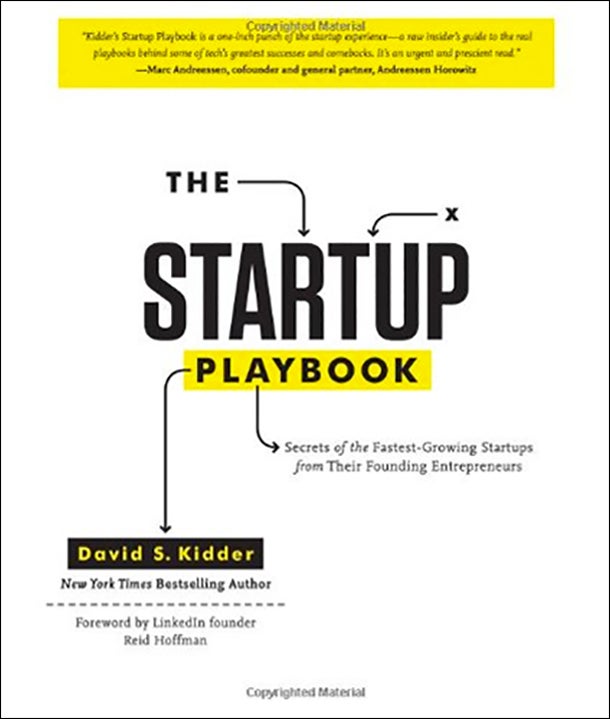
The Startup Playbook: Secrets of the Fastest-Growing Startups From Their Founding Entrepreneurs by David Kidder

1. The Startup Playbook: Secrets of the Fastest-Growing Startups From Their Founding Entrepreneurs by David Kidder

The title says it all. If you’re looking for a wide array of lessons learned and entrepreneurial experiences, this book is for you. Sharing insights from 41 different founders, The Startup Playbook covers everything from leadership lessons to finding one’s niche.

Creativity, Inc.: Overcoming the Unseen Forces That Stand in the Way of True Inspiration by Ed Catmull

2. Creativity, Inc.: Overcoming the Unseen Forces That Stand in the Way of True Inspiration by Ed Catmull

This book is a must read for any business leader, not just the entrepreneur. It is filled with valuable insights about what creates, drives and sustains an innovative culture and compels a company to attempt what no other company has done. Remarkable lessons that only a CEO would know.

True North by Bill George and Peter Sims

3. True North by Bill George and Peter Sims

This is a great book to discover your personal leadership vision, values and motivations. The authors surveyed 125 men and women on what they believe makes them authentic leaders, and the answers may surprise you. Also of note is the personal leadership development portfolio handbook that accompanies the book, which is a personal guide to help you develop your authentic leadership.

Zero to One: Notes Startups, or How to Build the Future by Peter Thiel

4. Zero to One: Notes Startups, or How to Build the Future by Peter Thiel

The following excerpt sums up the concept of Theil’s book: “Doing what someone else already knows how to do takes the world from 1 to n, adding more of something familiar. But when you do something new, you go from 0 to 1.”
This bestseller is geared specifically towards the startup community as it offers invaluable advice on what to consider and what to avoid before moving forward. Additionally, the author offers his philosophy on business, which helps the reader generate new ideas he or she may not have considered previously.

ThinkerToys by Michael Michalko

5. ThinkerToys by Michael Michalko

The ability to create is just that -- a developable ability -- that can be learned and improved upon much like any other competency, and the author does just that in this creativity “bible.” After all, creativity and opportunity are what emboldens wannabe startup founders to take the plunge into the world of debt known as entrepreneurship. ThinkerToys, and its companion Thinkpad: A Brainstorming Card Deck, offers 33 different exercises and 56 cards that will spark your creativity and inspire the innovation monster within.

Unbroken: A World War II Story of Survival, Resilience, and Redemption by Laura Hillenbrand

6. Unbroken: A World War II Story of Survival, Resilience, and Redemption by Laura Hillenbrand

There’s a reason why this book is number one on Amazon and a Hollywood motion picture. While entrepreneurism isn’t quite the theme of this book, the lessons of personal sacrifice, survival and resiliency are. After reading this book your perspective on founding a startup may change because if the main character, Louie Zamperini, overcame the challenges and catastrophes he faced, then so can you.

Team of Teams: New Rules of Engagement for a Complex World by Gen. (Ret.) Stan McChrystal, Chris Fussel, Tantum Collins, and David Silverman

7. Team of Teams: New Rules of Engagement for a Complex World by Gen. (Ret.) Stan McChrystal, Chris Fussel, Tantum Collins, and David Silverman

As head of the Joint Special Operations Command (JSOC), Gen. (Ret.) Stan McChrystal faced an enemy that was constantly changing before his very eyes. In a world of both complicated and complex challenges, how do you stay ahead of the power curve while the world and competition change? This book explains how.

Abundance: The Future is Better Than You Think by Peter Diamandis and Steven Kotler

8. Abundance: The Future is Better Than You Think by Peter Diamandis and Steven Kotler

While this book is completely visionary, it raises questions and concerns about current industrial and societal trends and where they will lead in the future. From a startup perspective, the global challenges the authors envision also serve as business opportunities. Of note, the authors have a second book entitled Bold coming out in February 2015 that will “teach today’s entrepreneurs the tools, technologies and mindsets they will need to make ‘it’ happen.”
Every book has some takeaway that can be applied towards any endeavor. What were your favorite books and lessons from 2014?

Source

Tuesday, January 6, 2015

Monday, January 5, 2015

7 Steps to Defining Your Niche Market

In their book, Start Your Own Business, the staff of Entrepreneur Media, Inc. guides you through the critical steps to starting a business, then supports you in surviving the first three years as a business owner. In this edited excerpt, the authors explain how you can find the right niche for your entrepreneurial needs.

You’ve come up with a great idea for a business, but you’re not ready to roll yet. Before you go any further, the next step is figuring out just who your market is.

There are two basic markets you can sell to: consumer and business. These divisions are fairly obvious. For example, if you're selling women’s clothing from a retail store, your target market is consumers; if you're selling office supplies, your target market is businesses (this is referred to as “B2B” sales). In some cases—for example, if you run a printing business—you may be marketing to both businesses and individuals.

No business—particularly a small one—can be all things to all people. The more narrowly you can define your target market, the better. This process is known as creating a niche and is key to success for even the biggest companies. Walmart and Tiffany are both retailers, but they have very different niches: Walmart caters to bargain-minded shoppers, while Tiffany appeals to upscale jewelry consumers.

“Many people talk about ‘finding’ a niche as if it were something under a rock or at the end of the rainbow, ready-made. That's nonsense,” says Lynda Falkenstein, author of Nichecraft: Using Your Specialness to Focus Your Business, Corner Your Market and Make Customers Seek You Out. Good niches don't just fall into your lap; they must be carefully crafted.

Rather than creating a niche, many entrepreneurs make the mistake of falling into the “all over the map” trap, claiming they can do many things and be good at all of them. These people quickly learn a tough lesson, Falkenstein warns: “Smaller is bigger in business, and smaller is not all over the map; it’s highly focused.”

Creating a good niche, Falkenstein advises, involves following a seven-step process:

1. Make a wish list.

With whom do you want to do business? Be as specific as you can. Identify the geographic range and the types of businesses or customers you want your business to target. If you don’t know whom you want to do business with, you can’t make contact. “You must recognize that you can’t do business with everybody,” Falkenstein cautions. Otherwise, you risk exhausting yourself and confusing your customers.

These days, the trend is toward smaller niches. Targeting teenagers isn’t specific enough; targeting male, African American teenagers with family incomes of $40,000 and up is. Aiming at companies that sell software is too broad; aiming at Northern California-based companies that provide internet software sales and training and have sales of $15 million or more is a better goal.

2. Focus.

Clarify what you want to sell, remembering that a) you can’t be all things to all people and b) smaller is bigger. Your niche isn't the same as the field in which you work. For example, a retail clothing business is not a niche but a field. A more specific niche may be “maternity clothes for executive women.”

To begin this focusing process, Falkenstein suggests using these techniques to help you:
  • Make a list of things you do best and the skills implicit in each of them.
  • List your achievements.
  • Identify the most important lessons you've learned in life.
  • Look for patterns that reveal your style or approach to resolving problems.
Your niche should arise naturally from your interests and experience. For example, if you spent 10 years working in a consulting firm but also spent 10 years working for a small, family-owned business, you may decide to start a consulting business that specializes in small, family-owned companies.

3. Describe the customer’s worldview.

A successful business uses what Falkenstein calls the Platinum Rule: “Do unto others as they would do unto themselves.” When you look at the world from your prospective customers’ perspective, you can identify their needs or wants. The best way to do this is to talk to prospective customers and identify their main concerns.

4. Synthesize.

At this stage, your niche should begin to take shape as your ideas and the client’s needs and wants coalesce to create something new. A good niche has five qualities:
  • It takes you where you want to go—in other words, it conforms to your long-term vision.
  • Somebody else wants it—namely, customers.
  • It’s carefully planned.
  • It’s one-of-a-kind, the “only game in town.”
  • It evolves, allowing you to develop different profit centers and still retain the core business, thus ensuring long-term success.

5. Evaluate.

Now it’s time to evaluate your proposed product or service against the five criteria in Step 4. Perhaps you’ll find that the niche you had in mind requires more business travel than you’re ready for. That means it doesn’t fulfill one of the above criteria—it won’t take you where you want to go. So scrap it, and move on to the next idea.

6. Test.

Once you have a match between niche and product, test-market it. “Give people an opportunity to buy your product or service—not just theoretically but actually putting it out there,” Falkenstein suggests. This can be done by offering samples, such as a free mini-seminar or a sample copy of your newsletter. The test shouldn’t cost you a lot of money: “If you spend huge amounts of money on the initial market test, you're probably doing it wrong,” she says.

7. Go for it!

It’s time to implement your idea. For many entrepreneurs, this is the most difficult stage. But fear not: If you did your homework, entering the market will be a calculated risk, not just a gamble.

Source

Sunday, January 4, 2015

5 Things to Do Every Day in 2015 to Be a Better Entrepreneur

When you are an entrepreneur, there is always something to do when it comes to starting and running a business. As chief cook and bottle washer, the challenge is to prioritize how you spend your hours in a workday.

For the new year, my goal is to be better at prioritizing my time. Below are a few tried-and-true actions, plus a few new ones, I plan to implement every day in 2015. Maybe you can use them, too.

1. Take time to focus on the day.

It's hard to stay focused once the day gets started, so it is key to schedule a few minutes a day to just be quiet and focus on what needs to be done. Take time out to unplug and be still. I find that quiet time in the morning is a good way to start the day. I took up yoga a few years ago and find that hot yoga is a great way to still my mind and focus. While this works for me, other people meditate or make time to pray.

2. Review your goals of the day.

Think about and commit to paper or document digitally the goals you want to accomplish that day or in the next week. I'm a big believer in creating a to-do list. My team starts with a list I call "The Week Ahead" where I outline the things to be accomplished for the week. Once it is down on paper or on screen, it serves as a guide to be followed and checked throughout the week.
Find the system that works to help you be more organized. Jotting notes on a Post-it is one way, but there are many electronic organizer options. If you're still into pen and paper, there are book organizers that you can use your for your to-do list. As you complete each task, mark it off the list. It's a great way to see how much progress you make in a day, a week or a month.
Next, have an in-person meeting, phone call or Skype session each morning with your team to set the mood for what needs to be accomplished that day.

3. Stay up to date on your industry.

While it is important to stay up to date on current events around the world, it is just as important to stay up to date on the current events in your industry. Read at least one article pertaining to your business. Follow a publication on Twitter so that its latest information comes up on your timeline. Subscribe to your industry's publication, so if you don't get to read it online, you will get it in the mail.

4. Use social media.

Check your website and all your social media buttons daily and make sure they are operating properly. Nothing is worse than a potential client trying to find you online and your site is down. If you have a blog, try to write anywhere from two to three times a week. This is a way for your customers to know your brand.
Read other people's blogs, and if you like what you read, then share it on different social-media platforms. Social media is an excellent way to promote and market your business and reach people both domestically and internationally. If you don't know how to use social media, then consider hiring an individual or company to create a strategy and manage your brand's social media.

5. Connect and reconnect to your network.

With everyone concentrating on staying connected via social media, it is good every once in a while to pick up the phone and say hello. Spend a few minutes on the phone setting up a time to meet for coffee or lunch. If you've been to conferences, met a few people and collected business cards, then reach out to those people again.
I joined contactually.com, a customer-relationship management (CRM) program, almost two years ago and promised to use it every day. It currently integrates Facebook, Twitter and LinkedIn with my contact profile, so I can reach out and follow up with folks easier. I haven't used it every day, but I plan to in 2015.

Source

Saturday, January 3, 2015

If You Want to Succeed, Here Are 5 Things You Need to Do Differently

No matter what your individual definition of success may be, finding it can often be a challenge. Whether its career success, monetary success or something in between, most people have a certain level of accomplishment that they want to reach in their lives. However, many fail to reach that magical level of success and have no idea why. The good news is, there are a few things that every person can do differently to change their current course of action and find the success that they deserve.

Below are five:

1. Stop looking for a perfect strategy

For the many people who take their quest for success seriously, they can get caught up in looking for a “perfect” strategy in reaching their goals. The truth is, there is never a perfect time to do anything, and there is no such thing as a perfect strategy. Many people fail to start “doing” the things they need to do, because they spend so much time planning. The only way to start a strategy is to get out there and take the first step. You can tweak and improve along the way but getting out and doing will be much more beneficial than spending all of your time trying to find the ideal strategy.

2. Stop seeing problems, start seeing opportunities

If you start looking at hurdles that come up as problems, you can put yourself in a negative mindset that will prevent you from finding success. If you instead start looking at these obstacles as opportunities, you can start finding more success. Take the challenge of approaching every problem and instantly calling it an opportunity. It can be hard to find opportunities in some problems, but if you look hard enough, there are positives even in the most overwhelming of issues.

3. Stop the information overload

Some people unfortunately find they spend too much time gathering information on how to succeed. When people do this too much, they can struggle with what is known as information overload. When you have too much information, you can suffer from paralysis by analysis and all of the research you have done can actually hurt instead of help. Nothing is as powerful as taking action and getting started.

4. Stop focusing so much on entertainment

While all people love to be entertained in a certain manner, society spends far too much time focusing on entertainment, instead of education. While you should always have you personal time outside of your professional life, many people spend too much time watching television, gossiping, playing video games and reading celebrity news. Doing this too much can prevent you from staying focused on your goals and your success. Spend your personal time entertaining yourself by consuming educational materials for personal growth. It will pay off in the long run and help you enjoy your personal time in a way that is still beneficial to your overall success.

5. Stop looking at the short term

Focusing on short-term accomplishments can actually get in your way when it comes to finding the substantial success you seek in life. This is something that many people struggle with, as there is nothing wrong with fulfilling short-term accomplishments but this shouldn’t be your focus. You should always be focusing on laying down a strong foundation for long-term growth. You can do this in a number of ways. Start looking at everything you do as a long -erm investment. Invest in your education, the future and do your best to ignore the appeal of instant gratification. This can take practice, but you can condition yourself to no longer find the same appeal in instant gratification.

Source

Friday, January 2, 2015

What You Can Learn From 8 Kids Already Making a Million Dollars

There’s no age limit when it comes to being a millionaire these days, and a handful of kids have struck it rich well before they can legally vote. They’re small business owners, inventors and entrepreneurs. I started as an entrepreneur when I was around 11 years old with my first candy stand, which grew to four candy stands, but that was nothing compared to some of these kids!

There’s is no age limit, either, when it comes to learning from others. These impressive kids learned from their own failures early in life but determined to keep going and to do it better the next time around. If you haven’t made your first million yet, the teen next door might actually be able to teach you something.

Check out these eight kids who made a million, or more, and what you can learn from their success:

1. Evan of EvanTube

With the help of his dad, this 8-year-old launched his own YouTube channel, titled EvanTube, and rakes in about $1.3 million each year. He reviews toys, talks about things that other kids his age are into, and he’s secured an audience that will grow with him. There are quite a few YouTube millionaires, so if you have the charisma to pull it off, it’s a free avenue for creating your own brand. Unfortunately, few entrepreneurs have the cuteness factor of Evan on their side.

2. Christian Owens

His motivator was Steve Jobs, and that’s how Owens made his first million at the age of 16. He got his own PC computer as an adolescent (soon followed by a Mac) and taught himself web design in middle school. By the age of 14, he’d started his own design company. Founder of Mac Bundle Box, he negotiated with developers and manufacturers to offer simple, discounted packages for his customers. The lesson? Follow your passions, claim your mentors and find a way to give people what they want for less.

3. Adam Hildreth

When he was just 14, Hildreth got together with friends to create Dubit—a social networking site. It was wildly popular in the UK and by his sixteenth birthday he had nearly $3.7 million in the bank. He then moved on to developing Crisp, which is a software company that helps protects kids from online predators. There’s nothing wrong with jumping on a trending bandwagon, but if you want continued success then find a way to branch out from it and innovate.

4. Cameron Johnson

Johnson was asked by his parents to develop invitation cards for a neighborhood party when he was 11. The guests adored the cards and started paying him to craft their own personal use cards. He founded “Cheers and Tears” by 14, then Cameron moved on to online advertising and software development. By high school, his monthly income was around $400,000. The lesson? Do everything well and don’t be afraid to try new things (or industries).

5. Geoff, Dave, and Catherine Cook

These dynamic siblings are behind, "MyYearbook," a (still) popular social media site that’s based on where you went to school. These kids had just moved to a new school and wanted to make new friends, so an online yearbook seemed like the perfect place to start. This was before Facebook was a household name. The lesson? Sometimes nepotism works, and if you find a disparity in the market, you can be the one to fill it.

6. Farrhad Acidwalla

In between attending school in Mumbai, India, this 16-year-old is the founder of Rockstah Media. It’s a comprehensive marketing agency boasting 20 employees around the world. “My team is the backbone of my company,” says Acidwalla. The lesson? Everyone has the same hours in the day, so if even those with limitations (like being a kid) can grow a company like this, so can you.

7. Emil Motycka

What started as a lawn mowing business when he was nine turned into Motycka Enterprises by the time he was 18. In order to keep up with all the demands of a teenager, he works the graveyard shift and says, “I sleep four hours a night on average” and call it sleep for the week. That amount of sleep might not be the best advice, but perseverance, and being willing to do what it takes to get the work done, can certainly get you to his level.

8. Ryan of “Ryan’s Barkery”

One of the handful of kids featured on “Shark Tank,” as an elementary school kid, Ryan raked in $25,000 for 25 percent of his business. Now Ryan is 12 years old, and is the young entrepreneur and founder of a dog treat bakery. He is building his business in an industry (pet pampering) that’s recession-proof. The lesson? Find your own niche, it's there waiting for you.
Think you’re beyond the age limit to make a million? Think again. Experience and maturity come with their own benefits.

Source

Thursday, January 1, 2015

4 Motivating TED Talks to Help You Keep Your New Year's Resolutions

Spend less. Save more. Eat less. Exercise more. You know the drill. 2015 is almost upon us and it’s clean-slate time again. Time to write a fresh list of New Year’s resolutions – ones you’ll actually keep this time, the whole year through. Maybe.

See, it’s that last part that’s tricky: sticking to your resolutions. Some 40 percent of Americans make New Year’s resolutions, but only about 8 percent of us achieve them, according to a study by the University of Scranton.

To help you make good on your goals for 2015, whether you want to get physically or financially fit or both -- or just to be a better, happier you all-around -- these inspiring TED Talks will motivate you to stick to your resolutions and, hopefully, see them through. Best of luck and don’t give up! We’re rooting for you, too.

1. Emily Balcetis: Why Some People Find Exercise Harder Than Others

Every year at the start of January, millions of Americans pledge to shed extra pounds and, with hard work and determination, many do. Meanwhile, others don’t – yours truly included. By Valentine’s Day, as social psychologist Emily Balcetis points out in her thought-provoking talk, many already break their New Year’s weight loss goals. Then they feel defeated and give up.

You might think people don’t attain their ideal weight because they fail to plan and execute effective diet and exercise regimes. Or maybe it seems as though they’re too lazy and to get up off the couch and move. But Balcetis posits out that perhaps they simply harbor the wrong view of exercise. The less in shape a person is, she says, the more likely he is to perceive exercise as difficult. The trick is to change your attitude about exercise and to “keep your eyes on the prize.” Hyper focus on the goal in front of you, Balcetis suggests, not on how hard it is to achieve. Your attitude could really determine your altitude.


2. David Steindl-Rast: Want to Be Happy? Be Grateful.

No matter who you are or where you are, everyone in the world wants the same thing: to be happy. But there’s no magic pill or foolproof recipe for happiness. Most of us want the easy way to bliss, the feel-good shortcut.

Or perhaps the secret to happiness is more stuff. More money. More, more, more. Yet even some of the richest people often aren’t happy. In his moving speech, Catholic Benedictine monk Brother David Steindl-Rast offers a different path to happiness, one that can be patiently drawn from the simple yet potent daily practice of being grateful and sharing your gratitude with others. In his view, happiness is yours if you’re mindful in the moment and “stop, look, go.”
  

3. Carol Dweck: The Power of Believing That You Can Improve

Believe and you will achieve. It’s more than just psychobabble. In her uplifting talk, Stanford University psychology professor Carol Dweck explains that mind over matter is real and really works.
Indeed we can grow our brain’s ability to learn and solve problems, Dweck says, even those that are extremely challenging for us to unravel. If you make a mistake along the way -- and we all do -- simply process it, learn from it, correct it and move on.

Perhaps it’s not that you aren’t smart enough to solve a difficult problem, Dweck says. You merely haven’t solved it...yet. Sounds a bit like making New Year’s resolutions, right? Perhaps you didn’t achieve some of them in the past because you didn’t really believe you could. Now you know better. Believe in yourself and the results will come.


4. Angela Lee Duckworth: The Key to Success? Grit.

Grit -- the elbow grease of motivation -- is undying determination in the face of obstacles, perhaps even those intimidating resolutions we create year after year for our own good. It’s also the single personality trait psychologist Angela Lee Duckworth says separates the successful from the unsuccessful, not one’s I.Q., good looks or charm.

Stamina. Passion. Perseverance. These are all part of possessing grit, which Duckworth says is the key ingredient in reaching our long-term goals. “Grit is sticking with your future, day in, day out, not just for the week, not just for the month, but for years, and working really hard to make that future a reality.”

Source